- Home Page /
- Books /
- Education Books /
- School & Teaching books /
- Instruction Methods /
- Reading & Phonics /
- When Kids Can't Read: What Teachers Can Do: A...

Item #:
4654262
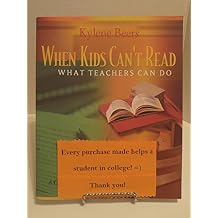
When Kids Can't Read: What Teachers Can Do: A Guide for Teachers 6-12 First Edition
Item #:
4654262
SLL 366366
Price Details
Excluding Shipping & Custom charges ( Shipping and custom charges will be calculated on checkout )
*All items will import from US
0 ratings
Write a review
In stock
 Imported from USA store
QTY:
Order now and get it around Saturday, July 11
Secured transaction
Ubuy works hard to protect your security and privacy. Our advanced payment security system ensures confidentiality by encrypting your information during transmission using AES (Advanced Encryption Standards) and SSL (Secure Socket Layer) protocols. Your payment details are 100% secure as we do not share your payment details with third party sellers.
Our Top Logistics Partners


For Kylene Beers, the question of what to do when kids can't read surfaced abruptly in 1979 when she began teaching.

Fast
Shipping

Free
Return*

Secure Packaging

100% Original Products

PCI DSS Compliance

ISO 27001 Certified


Note: Step Down Voltage Transformer required for using electronics products of US store (110-120). Recommended power converters Buy Now.


What Stands Out
Comprehensive Guidance
Offers teachers effective strategies to support students aged 6-12 facing reading difficulties, fostering improved literacy skills and confidence.
Practical Approaches
Provides actionable techniques and real-world examples, enabling educators to implement solutions directly in the classroom for immediate impact.
Research-Based Insights
Grounded in educational research, this guide equips teachers with evidence-backed methods, ensuring they can effectively address diverse reading challenges.
Product Details
| Item Weight | 1 lbs (450 grams) |
Who Should Buy?

-
New Teachers
Ideal for novice educators seeking effective strategies to support struggling readers in middle school classrooms.
-
Reading Specialists
Useful resource for specialists looking to enhance instructional approaches for students facing reading difficulties.
-
Special Education Teachers
A valuable guide for educators in special education, focusing on differentiated instruction and tailored reading support.

-
Experienced Educators
Seasoned teachers may find the content too basic and not addressing advanced reading intervention techniques.
-
Parents
Not suitable for parents seeking direct strategies to assist their children outside of a classroom setting.
-
General Public
Individuals without an educational background may struggle to fully grasp the teaching strategies presented in the book.
Product Description
When Kids Can't Read: What Teachers Can Do: A Guide for Teachers 6-12 First Edition
Have any Query? Chat with us
Customer Questions & Answers
-
Question:
What is the main purpose of 'When Kids Can't Read: What Teachers Can Do'?
Answer: The primary purpose of 'When Kids Can't Read: What Teachers Can Do' is to equip teachers with effective strategies to support students aged 6-12 who struggle with reading. This guide addresses common reading difficulties and provides practical techniques to enhance reading comprehension and fluency. It emphasizes the importance of early intervention and ongoing support, allowing educators to cater to diverse learning needs. For example, through differentiated instruction, teachers can implement tailored reading programs that benefit individual students, thereby fostering a love for reading and enhancing overall academic performance. -
Question:
Who is the author of 'When Kids Can't Read: What Teachers Can Do'?
Answer: The author of 'When Kids Can't Read: What Teachers Can Do' is Kylene Beers, a renowned educator and literacy expert. Beers has extensive experience in teaching and has dedicated her career to improving literacy among struggling readers. Her insights stem from years of working in classrooms and collaborating with educators to develop effective reading strategies. This guide reflects her commitment to empowering teachers with the necessary tools to assist their students, making it a valuable resource for educators looking to enhance their instructional practices. -
Question:
What age group is 'When Kids Can't Read: What Teachers Can Do' aimed at?
Answer: This guide is specifically aimed at educators working with students aged 6-12. It provides targeted resources and strategies for teachers who are involved in the foundational years of literacy development. The age focus aligns with critical periods in a child's literacy journey, where early interventions can lead to significant long-term benefits. For instance, teachers can utilize the strategies outlined in the guide during reading sessions, small group activities, or individualized support, ensuring that each child receives the attention they need to thrive. -
Question:
What types of reading difficulties are addressed in this guide?
Answer: The guide addresses various reading difficulties, including issues with decoding, comprehension, and fluency. It delves into specific challenges that many students face, such as trouble recognizing sight words, difficulties with phonemic awareness, and a lack of confidence during reading activities. By identifying these challenges early, educators can implement the strategies highlighted in the book to target these areas effectively. For instance, using phonics-based approaches or introducing guided reading can help students improve their skills and feel more empowered as readers. -
Question:
How can the strategies in the book be implemented in the classroom?
Answer: The strategies presented in 'When Kids Can't Read: What Teachers Can Do' can be seamlessly integrated into daily lesson plans and reading interventions. Teachers can adopt techniques such as scaffolded instruction, where gradually increasing support is given to help students build their reading confidence. Additionally, the use of collaborative activities, such as peer reading groups, promotes engagement and fosters social learning. These methods not only help struggling readers but also strengthen the overall reading culture within the classroom. -
Question:
Is this guide suitable for all types of learners?
Answer: Yes, the guide is designed to cater to a diverse range of learners, including those with identified learning disabilities and English language learners. Its adaptable strategies allow educators to modify their instruction to meet varied learning needs effectively. For example, teachers can incorporate visual aids and interactive participation for those who benefit from multisensory learning approaches. The inclusive nature of the guide ensures that every student, regardless of their background or reading ability, has the opportunity to improve their literacy skills. -
Question:
What resources are included in 'When Kids Can't Read: What Teachers Can Do'?
Answer: The book is rich with practical resources, including assessment tools, lesson plans, and reading activities tailored to support struggling readers. These resources are designed to be readily applicable in the classroom, providing teachers with immediate support to address their students’ reading challenges. Additionally, it includes case studies and real-world scenarios that illustrate the successful implementation of the suggested strategies. This makes it easier for educators to visualize how to apply the advice in their specific teaching contexts. -
Question:
Can parents use this book to help their children improve reading skills?
Answer: While the book is primarily aimed at teachers, parents can certainly benefit from its insights and strategies to help their children improve their reading skills at home. It provides a clear understanding of common reading difficulties and effective intervention techniques. Parents can implement activities suggested in the book, such as reading together or encouraging discussions about stories, to enhance their child's comprehension and engagement with reading. By coordinating efforts with teachers, parents can create a supportive literacy environment both at home and in school. -
Question:
How does 'When Kids Can't Read: What Teachers Can Do' differ from other literacy guides?
Answer: This guide distinguishes itself from other literacy resources by focusing specifically on actionable strategies for teachers dealing with students who struggle with reading. Unlike more general literacy guides, it delves deeply into diagnosing specific reading problems and offers practical, research-based solutions tailored to enhance teacher effectiveness. Its evidence-based approach, coupled with real-life classroom scenarios, allows educators to relate concepts to their teaching practices, making it a uniquely valuable resource in the realm of literacy education. -
Question:
Where can I buy 'When Kids Can't Read: What Teachers Can Do' in Sierra Leone?
Answer: You can purchase 'When Kids Can't Read: What Teachers Can Do: A Guide for Teachers 6-12 First Edition' through Ubuy in Sierra Leone. Ubuy offers a comprehensive selection of educational resources, including this essential guide for teachers looking to improve their reading instruction strategies. By shopping on Ubuy, you can ensure that you are getting a valuable resource that will assist you in supporting your students who face reading challenges.
Reading & Phonics Editorial Review
No editorial reviews found
Customer Reviews & Ratings
1 customers ratings
-
5 Star
100%
-
4 Star
0%
-
3 Star
0%
-
2 Star
0%
-
1 Star
0%
Review this product
Share your thoughts with other customers
Product Price History
Important information
- Limitations : For products shipped internationally, please note that any manufacturer warranty may not be valid; manufacturer service options may not be available; product manuals, instructions, and safety warnings may not be in destination country languages; the products (and accompanying materials) may not be designed in accordance with destination country standards, specifications, and labeling requirements; and the products may not conform to destination country voltage and other electrical standards (requiring use of an adapter or converter if appropriate). The recipient is responsible for assuring that the product can be lawfully imported to the destination country. When ordering from Ubuy or its affiliates, the recipient is the importer of record and must comply with all laws and regulations of the destination country.
- Not all the products listed on Ubuy are for sale, as Ubuy is a global search engine. Products are subject to export/trade regulations.
SLL 366366
Order now and get it around Saturday, July 11
This item is not restrict in my country.(Please click on above link if this item is not restrict in your country, So our team will review and allow.)
QTY:
Secured transaction
Ubuy works hard to protect your security and privacy. Our advanced payment security system ensures confidentiality by encrypting your information during transmission using AES (Advanced Encryption Standards) and SSL (Secure Socket Layer) protocols. Your payment details are 100% secure as we do not share your payment details with third party sellers.
Our Top Logistics Partners
Fastest cross-border delivery
Features & Benefits
- A comprehensive guide for teachers to help struggling readers
- Provides strategies for improving comprehension, vocabulary, fluency, word recognition, and motivation
- Includes student transcripts, reproducible material, and extensive booklists
- Instructs and inspires teachers
- Written by Kylene Beers, a seasoned educator with extensive experience
- Addresses the needs of middle and high schoolers